Skip to Content


The 15th edition of the ACEEE State Energy Efficiency Scorecard provides an update on state energy efficiency policies and programs that save energy, advance equity, and produce environmental and economic benefits. The scorecard ranks states in six policy areas: utility programs, transportation, building energy codes, state initiatives, industrial energy efficiency, and appliance standards. This year’s scorecard has an expanded focus on equitable energy efficiency policies that reduce energy burdens for low-income and disadvantaged households and historically underserved communities. Top finishers in this year’s scorecard include California, Massachusetts, New York, Vermont, and Maine, which was the most-improved state in 2022. The state scorecard shows that energy efficiency is a key resource, with utilities saving 26.6 million MWh of electricity nationwide in 2021.

Download the Research Report View Press Release

Highlights of each state’s progress are included in the fact sheets linked below. To find extended details on each state’s energy efficiency efforts, visit our state and local policy database.

The 2022 State Energy Efficiency Scorecard

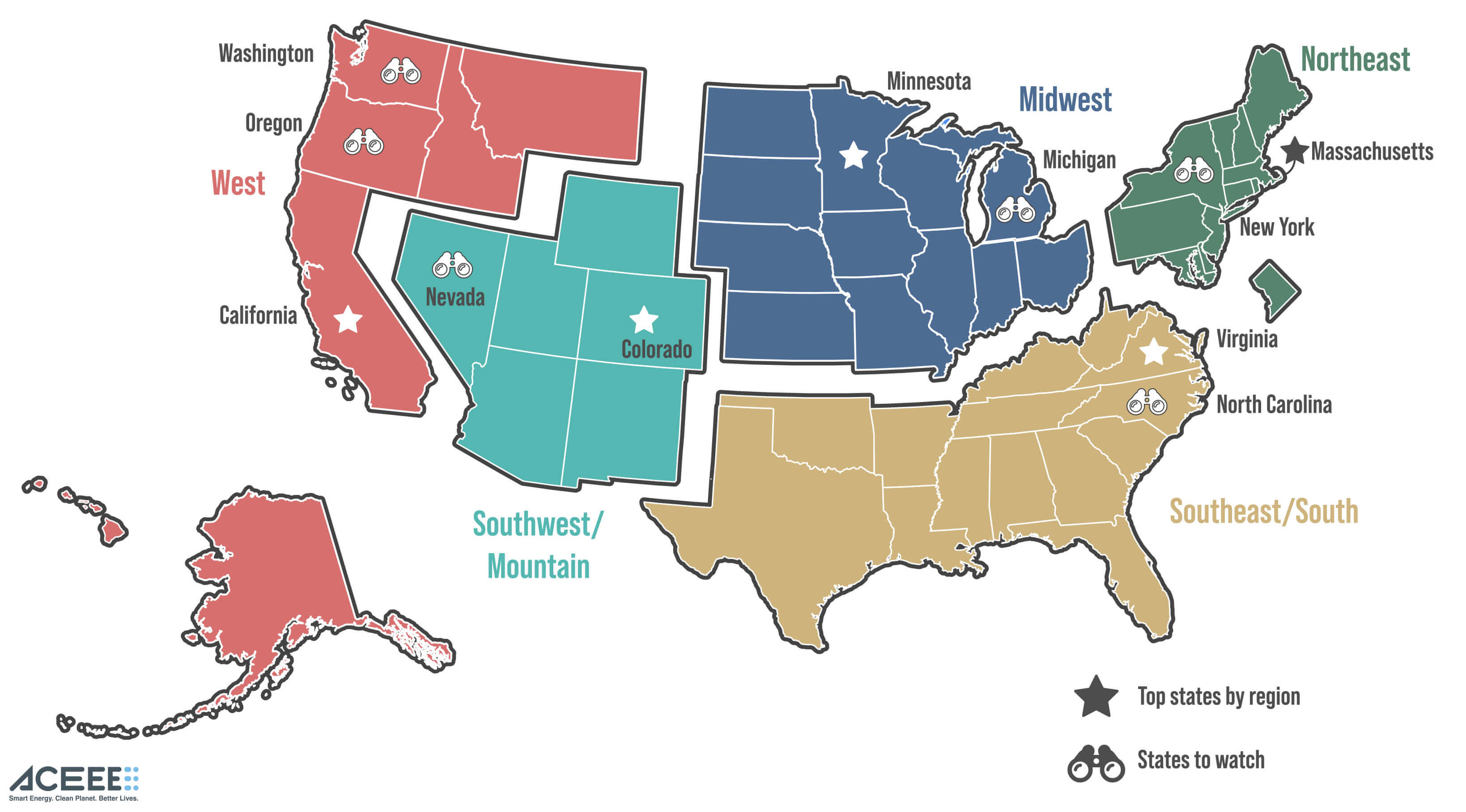
Click an individual state to view its state fact sheet. Click here to view map full-screen.
Click here for a static version of the map.

1. California

2. Massachusetts

3. New York

4. Vermont

5. Maine

6. District of Columbia

7. Rhode Island

7. Maryland

9. Connecticut

10. Minnesota

11. Oregon

11. Washington

13. Colorado

14. New Jersey

15. Michigan

16. Illinois

17. Hawaii
18. Delaware

19. New Hampshire

20. Virginia

21. Pennsylvania

21. Nevada

23. Utah

23. New Mexico

25. North Carolina

26. Wisconsin

26. Arizona

28. Tennessee

29. Missouri

29. Montana

29. Texas

29. Florida

33. Idaho

34. Indiana
35. Iowa

35. Nebraska

37. Arkansas

38. Kentucky

39. Georgia

39. Alaska

41. Oklahoma

41. Alabama

43. North Dakota

44. West Virginia

44. Ohio

46. Mississippi

46. Louisiana

46. South Dakota

49. South Carolina

49. Kansas

51. Wyoming

Regional Highlights

Regional “states to watch” have ranked highly in their region and offer promising models for their neighbors.

Previous Scorecards

2020 | 2019 | 2018 | 2017 | 2016 | 2015 | 2014 | 2013 | 2012 | 2011 | 2010 | 2009 | 2008 | 2006

Related Resources

Bridging the Equity Gap for Utility Energy Efficiency Programs
equity
  • Research Report
  • Affordability and Energy Equity
  • Energy Efficiency Policy
  • Homes and Buildings
  • Utilities and the Power Sector
  • Bridging the Equity Gap for Utility Energy Efficiency Programs

    Note: This report was updated on July 31, 2026, to reflect data from Commonwealth Edison received after publication that showed additional spending on low-income efficiency programs. Resultant updates to the analysis yielded an increase in the overall average spending (of all utilities in the sample) on low-income programs in 2024. This increased the average share of budgets dedicated to programming for low-income populations to 14.1% and reduced the average “equity gap” to 13.8%; each change was less than 1 percentage point. ComEd-specific results were updated throughout. Additionally, the per-household savings data for Baltimore Gas and Electric was corrected, and that resulted in BGE no longer being listed in the top quartile of utilities in that category.

    Jul 31, 2026

    Efficiency Saves: Cutting Energy Waste Can Save $31,000 per Household
    An Indian couple sitting on a couch looking at energy bills.
  • Research Report
  • Energy Efficiency Policy
  • Homes and Buildings
  • Efficiency Saves: Cutting Energy Waste Can Save $31,000 per Household

    The United States faces interlocking energy challenges: rising home energy bills and gasoline prices; new demand for electricity from data centers and other loads; high greenhouse gas emissions from burning fossil fuels. 

    Now, a new era of energy efficiency progress in our buildings, transportation, and industry is needed to meet this moment. This wide-ranging study finds a massive opportunity.

    Jul 27, 2026

    Support the Work That Makes Energy Go Further

    ACEEE’s independent research and advocacy depend on the support of foundations, businesses, and individuals committed to a cleaner, more affordable energy future for all Americans.